Press Release: HKU-led PISA 2025 Study Highlights Hong Kong Students’ Strength in Computational Problem-Solving and Next Steps for Future Readiness
新聞稿:港大PISA 2025研究顯示香港學生計算解難能力表現突出 提出進一步提升學生迎接未來準備度的方向
Updated on September 08, 2026 (Tue)
HKU-led PISA 2025 Study Highlights Hong Kong Students’ Strength in
Computational Problem-Solving and Next Steps for Future Readiness
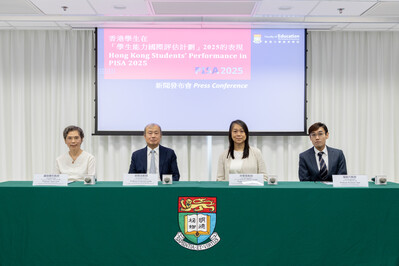
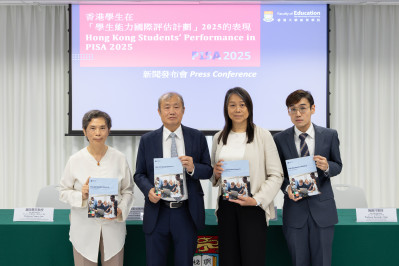
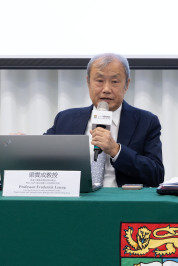
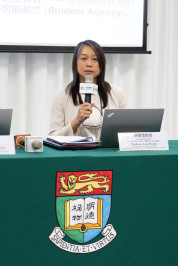
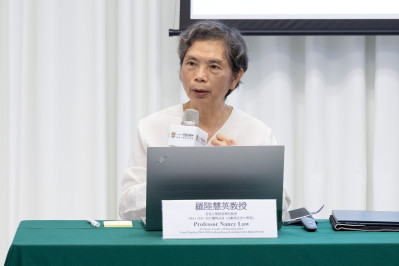
- The Faculty of Education of The University of Hong Kong (HKU) announces the Hong Kong results of the Programme for International Student Assessment (PISA) [1] commissioned by Education Bureau of the Government of the Special Administrative Region and conducted in 2025. The PISA Project Team, led by Professor Frederick K.S. Leung and Professor Wai-ip Lam, informs the public about the findings of the Hong Kong component of PISA 2025 at the press conference concurrently with the official international press release in Paris, France, today on September 8, 2026. The results highlight Hong Kong students’ strengths and provide an international reference point for improving students’ future readiness:
- Hong Kong students continued to perform above international averages in science, mathematics and reading, and performed particularly strong in Learning in the Digital World, the innovative domain assessing computational problem-solving skills.
- Scores in science, mathematics and reading were however lower than those in PISA 2022, suggesting the need to give students more opportunities to apply abstract ideas and subject knowledge, evaluate information from multiple sources, and solve unfamiliar and complex problems.
- The findings highlight the need to strengthen students’ future readiness by fostering student agency, particularly their drive to learn, self-regulated learning capacity, and evidence-based reasoning.
PISA’s Focus on Future Readiness and Student Agency
- PISA, coordinated by the Organisation for Economic Co-operation and Development (OECD) [2], differs from curriculum-based assessments. It focuses on how well 15-year-old students apply knowledge and skills to unfamiliar and real-world situations, reflecting their readiness to navigate, adapt to and thrive in a rapidly changing, complex and uncertain world. Its results should therefore be interpreted as one source of evidence for improvement for future readiness, rather than as a complete measure of education quality.
- In the OECD framework, future readiness refers to young people’s capacity to thrive in, adapt to and help shape an increasingly complex world. Central to this is student agency: the ability to set goals, make informed choices, act, reflect and take responsibility. PISA 2025 reflects these priorities through assessments in science, mathematics, reading and digital learning, as well as surveys on students’ attitudes, learning strategies and school environments.
Excellent Performance in Learning in the Digital World (Computational Problem-Solving Skills)
- PISA features an innovative domain in each cycle to gauge whether students have acquired the knowledge and skills needed for future life. For PISA 2025, the innovative domain is “Learning in the Digital World”, which assesses computational problem-solving skills.
- Hong Kong students performed strongly in this innovative domain. They scored 545 in this innovative domain, significantly higher than the international benchmark average of 500, placing it among the top-performing countries/economies worldwide.
- In this domain, 42.9% of participating students reached the highest proficiency levels, Levels 5 and 6 [3], and a further 21.6% reached Level 4. The percentage of students at Level 5 and above is significantly higher than the percentage on average across OECD countries. This shows that many Hong Kong students can engage in moderate to sophisticated programming and modelling, apply computational logic and solve problems in digital environments.
- This result may reflect the cumulative contribution of science, mathematics, STEAM education and digital literacy education in Hong Kong. The skills involved in computational problem-solving are closely related to science, mathematics and reading, especially when students are required to define problems, interpret data, test solutions and explain conclusions. Hong Kong students’ strong performance in this domain suggests that they have potential that can be further applied across domains, and that they are well-positioned to benefit from recent digital education initiatives and engage with emerging technologies.
Core Domains Above International Averages, with Opportunities to Strengthen Advanced Competencies
- Across the three core PISA domains, Hong Kong students continued to perform above international averages. Most students attained Levels 2 to 4, showing that they have reached at least the baseline level of proficiency needed for further learning and everyday problem-solving.
- Science - Hong Kong scored 496, significantly higher than the international average of 482. Around 79% of students attained at least a baseline level of proficiency.
- Mathematics - Hong Kong scored 522, significantly above the international average of 463, remaining among the higher-performing countries/economies. Around 83% of students reached at least a baseline level of proficiency.
- Reading - Hong Kong scored 480, above the international average of 461. Students chose Chinese or English as their assessment language, and around 78% attained at least a baseline level of proficiency.
- Scores in science, mathematics and reading were 18 to 24 points lower than those in PISA 2022. While most students continued to show solid foundations, their abilities to solve complex and unfamiliar problems, evaluate information critically, reason with abstract ideas and justify conclusions independently could further be strengthened.
Understanding Score Changes in a Broader Context
- In its analysis of international score declines in reading, the OECD cautions that changes should not be attributed to a single cause. These observations may also be relevant to Hong Kong. The current student cohort experienced disruption and adjustment during and after the COVID-19 pandemic, while also growing up in a highly digital environment with rapid and fragmented online content. These wider contexts may have affected students’ learning routines, attendance, engagement, sustained attention, information processing and perceived value of schooling, which in turn may have influenced how they applied knowledge and performed in the assessment.
- Changes in what PISA assesses should also be considered when interpreting score trends. Recent PISA frameworks place greater emphasis on future readiness for complex real-world challenges. For example, PISA 2018 Reading added ‘evaluating’ to reflect digital and multiple-source reading; PISA 2022 Mathematics made ‘mathematical reasoning’ more explicit and central; and PISA 2025 Science introduced new competencies on researching, evaluating and using scientific information for decision making and action.
- These changes point to the next stage of learning development. Hong Kong students have a strong foundation but need more regular opportunities to develop advanced skills needed for future learning and work.
Next Steps: Fostering Student Agency
- To develop the advanced competencies, students require stronger student agency. HKU’s analysis identifies three related capacities of student agency that can support this development:
- Drive to learn describes how students approach learning with goals, curiosity, perseverance and enjoyment in solving problems. Hong Kong students reported strong enjoyment of problem-solving compared with their international peers. However, their broader curiosity and perseverance remain slightly below the international average, and their perceived value of schooling has declined moderately. This suggests the need to help students better connect school learning with future study, work and adult life.
- Self-regulated learning capacity concerns students’ ability to monitor progress, seek help, and adjust strategies when learning becomes difficult. Hong Kong students reported relatively strong help-seeking, especially from teachers. This is a positive sign of active learning. At the same time, their cognitive adaptability, the ability to adjust thinking and strategies in new, difficult or changing situations, was below the international average. Together with a lower reported growth mindset, this suggests the need to strengthen students’ confidence in adapting to new situations and seeing ability as something that can grow through sustained effort.
- Evidence-based reasoning involves students’ ability to use evidence to solve unfamiliar problems, evaluate information, interpret data, test possible solutions and explain conclusions. Hong Kong students demonstrated a clear strength in computational problem-solving, which shares important features with science, mathematics and reading literacy. They also showed relatively strong understanding of knowledge and evidence in science, particularly among higher-performing students who checked sources and relied on scientific studies. However, some students appeared to use scientific information without consistently verifying sources. This points to the importance of strengthening information evaluation in digital and AI-rich environments.
- Classrooms play an important role in developing student agency by providing well-designed learning opportunities. Students benefit when teachers ask them to think deeply, explain their reasoning, work with abstract ideas, test evidence and build knowledge with classmates, rather than only answer routine questions. Teachers and peers therefore remain as important sources of support, helping students take initiative, seek help, reflect and improve.
Underlying Strengths of Hong Kong Education Landscape
- HKU’s analysis also identifies continuing strengths in Hong Kong’s education landscape.
- Environmental agency and digital adaptability: A notable strength is students’ performance in environmental agency and digital adaptability. Hong Kong students scored 497 in environmental agency in the science domain, above the international average of 480, with nearly 80% reaching at least Level 2, the baseline proficiency level. Students also showed strong pro-environmental attitudes. Together with their strong computational problem-solving performance, this suggests a solid foundation for engaging with future environmental challenges and emerging technologies.
- Committed teachers: Teacher support remains a strength. High percentages of students reported that their science teachers show genuine interest in their learning, at 81.2%, higher than international percentage of 68.8%. Similarly, 82.1% reported that their teachers provide extra help until students understand, higher than international average of 72.7%. This represents an improvement since 2015 and reflects stronger classroom support.
- Educational equity: As in previous years, Hong Kong continues to demonstrate strengths in educational equity. Around 15% of disadvantaged students remain among the top performers, higher than the international average of 12%. This reflects the importance of targeted support and the system’s commitment to providing opportunities for learners from different backgrounds.
Building Future Readiness in the Age of AI
- Moving forward, HKU’s analysis suggests broader opportunities to stretch more students towards advanced competencies. Hong Kong students’ strong performance in Learning in the Digital World indicates that many already have the potential to work with complex digital and computational problems, including modelling, logical reasoning, testing solutions and evaluating information. This strong foundation presents an opportunity to extend these strengths more fully to science, mathematics and reading, especially in tasks that require abstract reasoning, critical evidence evaluation, sophisticated modelling and clear explanation to complex issues.
- The PISA assessment results can provide valuable insights for Hong Kong schools and teachers to further improve students’ future readiness. Schools may use the findings to review curriculum planning, identify strengths and areas for improvement, while teachers may translate the results into classroom practice by strengthening students’ problem-solving skills and engaging them in evidence-based reasoning. In this way, PISA assessment can be used as a learning opportunity to improve student agency, rather than being viewed solely as an endpoint. To support this work, HKU has already planned a series of seminars and workshops for educators on interpreting PISA findings and applying them to teaching, assessment design and school-based strategies.
- In the age of AI, student agency is especially important. Students need to use digital and AI tools not to replace thinking, explanation or reasoning, but to ask better questions, check sources, compare evidence, improve explanations and reflect on their learning. The next step is to empower students to apply these competencies more widely across domains, including judging the credibility of information, using technology responsibly, understanding complex issues from multiple perspectives and taking informed action. These efforts will strengthen students’ future readiness in an AI-driven and sustainability-focused world, and align with international education developments, including the growing emphasis on AI-related literacy in the upcoming PISA 2029 cycle.
Footnotes
[1] PISA is an international large-scale education study coordinated by the Organisation for Economic Co-operation and Development (OECD). It examines 15-year-old students’ ability to apply knowledge and skills in real-life contexts. Each PISA cycle covers three core domains, reading, mathematics and science, while placing particular emphasis on one major domain. In PISA 2025, science was the major domain. Each cycle also includes an innovative domain. In 2025, this was Learning in the Digital World, which assessed students’ computational problem-solving skills. A total of 91 countries and economies participated in 2025, with more than 760,000 students taking part worldwide. Since 2020, PISA has been conducted every three years, and starting from 2025, the study cycle will move from a three-year to a four-year cycle.
[2] OECD is an international organisation of member countries that also works with partner economies. It addresses policy issues including education, economic development, employment, innovation and social well-being. The OECD coordinates PISA and reports international benchmarks, enabling participating countries/economies to compare students’ performance across domains and over time.
[3] In PISA, proficiency levels describe what students can typically do at different levels of performance. Level 1 represents the lowest proficiency level and Level 6 the highest. Levels 5 and 6 are commonly regarded as top-performing levels, students at Levels 2 to 4 are described as attaining baseline to medium proficiency, while performance below Level 2 is generally considered as low-performing.
Media Note:
For media enquiries, please contact:
Ms Kelly Shum
Executive Officer (Communications)
Faculty of Education, HKU
3917 8239 (Tel)
[javascript protected email address] (Email)
For enquiries concerning PISA 2025, please contact:
Professor Frederick Leung
Emeritus Professor, Faculty of Education, HKU
Project Leader and National Project Manager of PISA 2025 in Hong Kong
3917 4248 (Tel)
[javascript protected email address] (Email)
Professor Wai-ip Lam
Associate Professor, Faculty of Education, HKU
Co-Project Leader and Team Member of PISA 2025 in Hong Kong (Language and Reading)
3917 5282 (Tel)
[javascript protected email address] (Email)
Ms Connie Leung
Project Manager of PISA 2025 in Hong Kong
Faculty of Education, HKU
3917 6102 (Tel)
[javascript protected email address] (Email)
September 8, 2026
港大PISA 2025研究顯示香港學生計算解難能力表現突出
提出進一步提升學生迎接未來準備度的方向
- 香港大學(港大)教育學院受香港特別行政區政府教育局委託,早前進行學生能力國際評估計劃 (PISA)2025 [1] 香港區測試。由梁貫成教授及林葦葉教授領導的PISA 研究團隊在新聞發布會上,公布PISA 2025 香港的研究結果,而官方的國際新聞公布亦於今天9月8日,在法國巴黎同步舉行。研究結果顯示本港學生的優勢,以及從國際比較角度下在提升學生迎接未來準備度的啟示:
- 香港學生在科學、數學及閱讀三個核心領域的表現持續高於國際平均水平,並在創新領域「在數碼世界中學習」表現特別突出,反映學生具備良好的計算解難能力;
- 與PISA 2022比較,香港學生在科學、數學及閱讀的分數均錄得下跌,顯示有需要為學生提供更多機會,讓他們應用學科的核心概念和知識、評估不同來源的資訊,以及解決不熟悉環境中的複雜問題;
- 結果亦顯示,為進一步提升學生迎接未來的準備度,需加強培養學生的學習能動性,尤其是他們的學習動力、自我調適能力和證據為本推理能力。
PISA的評估焦點:未來準備度 (Future Readiness) 與學習能動性 (Student Agency)
- PISA由經濟合作與發展組織 (OECD) [2] 統籌,有別於一般以課程為本位的教育評估。PISA旨在評估15歲學生能否在真實、不熟悉的情境中應用知識與技能,反映他們在瞬息萬變、複雜而充滿不確定性的世界中應對挑戰、適應變化,並展現所長。因此,PISA的研究結果應視為教育改進的其中一項參考,而不應視為對教育質素的評量。
- 在OECD框架下,未來準備度是指青年人在日益複雜的世界中適應、發展,並參與塑造未來的能力。當中,學習能動性十分重要,即學生能夠制定目標、審慎抉擇、付諸行動、反思並承擔責任。PISA 2025透過科學、數學、閱讀及數碼學習的評估,以及有關學生的學習態度、學習策略和學校環境的問卷調查,以反映這些因素。
「在數碼世界中學習」的計算解難能力表現突出
- 每屆PISA均引入一項創新領域,以評估學生是否掌握未來生活所需的知識與技能。PISA 2025的創新領域為「在數碼世界中學習」,評估學生的計算解難能力。
- 本港學生在「在數碼世界中學習」的優異表現,取得545分,顯著高於國際平均值500分,位列全球表現最佳的國家或經濟體之一。
- 參與評估的42.9% 學生達到最高能力水平(第5及第6級 [3]),另有21.6% 的學生達到第4級。香港學生達到第五級或以上的百分比,顯著高於OECD國家的平均百分比。這顯示多數學生具備中等乃至複雜程度的編程和建模能力,並能有效運用計算邏輯,在數碼環境中解決問題。
- 學生的優異表現或反映了香港在科學、數學、STEAM教育及數碼素養教育的成效。計算解難所涉及的能力與科學、數學和閱讀息息相關,尤其在界定探究問題、詮釋數據、測試方案和解釋結論等方面。香港學生在此創新領域的卓越表現,不僅顯示他們具備潛能,可進一步應用於其他領域,亦反映他們已準備好迎接全面的數碼教育,並能夠從近年的數碼教育措施中受益,善用各類新興科技。
核心領域表現高於國際平均水平,仍具空間提升高階能力
- 在三個PISA核心領域中,本港學生的整體表現持續高於國際平均水平。大部分學生達到第2至第4級,顯示他們具備日常解難所需,以及進一步學習的基本能力。
- 科學:香港取得496分,顯著高於國際平均值482分;約79% 的學生達到基本或以上能力水平。
- 數學:香港得分為522分,遠高於國際平均值463分,持續位列表現較佳的國家或經濟體之一;約83% 的學生達到基本或以上能力水平。
- 閱讀:香港取得480分,高於國際平均值461分。學生可選擇以中文或英文答題,約78% 達到基本或以上能力水平。
- 與PISA 2022比較,本港學生在科學、數學及閱讀的分數下跌18至24分之間。雖然大部分學生具備穩固基礎,但仍可進一步提升他們解決複雜和不熟悉的問題、審慎評估資訊、運用學科核心概念推理,以及獨立解釋和論證結論的能力。
從宏觀角度理解分數變化
- OECD在分析國際閱讀分數錄得下跌時指出,成績變化不應歸因於單一因素;相關觀察亦可能適用於香港情況。本屆學生在新冠疫情期間及其後經歷學習中斷和重新適應過程,同時亦成長於高度數碼化的環境,經常接觸快速和碎片化的網絡資訊。這些宏觀背景可能影響學生的學習習慣、學勤情況、學習投入程度、持續專注力、資訊處理能力,以及他們對學校教育的重視程度,繼而影響他們在評估中應用知識和作答的表現。
- 解讀分數的變化時,亦應一併考慮PISA評估框架的演變。近年PISA框架更重視學生面對複雜且真實挑戰時,迎接未來所需的準備度。例如,PISA 2018閱讀加入「評估」能力,以回應數碼及多文本閱讀的需求;PISA 2022在數學領域中,更明確地把「數學推理」置於核心位置;而PISA 2025中的科學則加入與研究、評估及運用科學資訊作決策與行動的相關能力。
- 評估框架的轉變反映下一階段的學習發展方向。香港學生具備穩固基礎,但需要更恆常而有系統的學習機會,發展面向未來學習和工作的高階能力。
跟進方向:培養學生學習能動性
- 為發展高階能力,學生需要更強的學習能動性。港大的分析顯示,學習能動性可從以下三項相關能力理解:
- 學習動力:指學生能否帶着目標,具備好奇心、毅力和解決問題的興趣投入學習。本港學生在解難興趣方面的表現較國際同儕為佳。然而,學生整體的好奇心和毅力仍略低於國際平均水平,而他們對學校教育的重視程度亦有中等程度的下降。這顯示有必要協助學生更好地連繫學校學習與未來升學、工作及成年後的生活。
- 自我調適能力:指學生在學習上遇到困難時,能否監察自己的進度、尋求協助和調整策略。本港學生在尋求協助方面表現較強,尤其是向教師求助,反映學生具備主動學習的能力。另一方面,學生的認知適應力,即在面對陌生的難題、不斷轉變的情境中調整思考和策略的能力,低於國際平均水平。加上學生在成長型思維方面的表現較低,顯示有需要加強學生面對新情境時的信心,並幫助他們相信能力可透過持續努力而提升。
- 證據為本推理:指學生能否運用證據解決不熟悉的問題、評估資訊、詮釋數據、測試可能的應對方案和解釋結論。本港學生在計算解難方面展現明顯優勢,而這些能力與科學、數學和閱讀素養有不少共通之處。學生在科學中運用知識與證據表現亦相對良好,特別是較高能力的學生,他們較能查核資料來源、運用科學研究來學習與解決難題。不過,部分學生在使用科學資訊時,未必能持續核實資料來源。反映在數碼和人工智能的時代,有必要進一步加強資訊評估的能力。
- 課堂學習對培養學生學習能動性至關重要。教師若能設計高階能力的學習機會,鼓勵學生深入思考、解釋推理、處理核心概念、檢視證據,並與同學共同建構知識,而非僅回答常規的問題,學生將更能受益。教師和同儕是學生學習過程中的重要支援,有助他們主動學習、尋求協助、反思和改進。
香港教育體系的核心優勢
- 港大的分析亦顯示香港教育體系具備多項持續優勢。
- 環境行動力及數碼適應力:本港學生在環境行動力及數碼適應力方面表現優異。學生在科學領域中的環境行動力取得497分,高於國際平均值480分,近80% 學生達到至少第2級(基本能力水平),亦展現積極的環保態度。結合他們在計算解難方面的突出表現,這些結果反映學生具備良好的基礎,可應對未來環境與新興科技帶來的挑戰。
- 盡心教學的教師團隊:教師支援仍是香港教育的優勢。高達81.2% 的學生表示科學教師關心他們的學習,高於國際平均的68.8%;82.1% 的學生表示教師會給予他們額外輔導,直至他們完全理解,這項指標也高於國際平均的72.7%。另外,此數據自2015年以來不斷提升,反映課堂支援持續加強。
- 教育公平:與歷屆PISA表現一致,香港在教育公平方面繼續展現優勢。約15% 的弱勢學生仍能位列高表現組別,高於國際平均的12%。這既反映支援弱勢學生的重要性,亦顯示香港教育體系致力為不同背景學生提供機會,並取得顯著成效。
在人工智能時代提升未來的準備度
- 展望未來,港大的分析顯示,香港仍有空間協助更多學生邁向高階能力水平。本港學生於「在數碼世界中學習」的優秀表現,反映不少學生已具備處理複雜數碼和計算難題的潛力,包括建模、邏輯推理、測試方案和評估資訊。此堅實的基礎為學校和教師提供了良好契機,更充分地把優勢轉化並應用於科學、數學及閱讀等領域,尤其是涉及抽象推理、審慎評估證據、建立複雜模型,以及清晰解釋複雜問題的任務。
- PISA評估結果可為香港學校和教師帶來寶貴的啟示,進一步提升學生的未來準備度。學校可利用評估結果檢視課程規劃,識別學生的優勢與可加強之處;教師則可將結果轉化為課堂實踐,例如加強學生的解難能力,並引導他們進行以實證為本的推理。透過此方式,PISA的評估結果便能成為促進學生學習能動性的學習機會,而非僅僅被視為一次評估的結束。為支援這項工作,港大已計劃為教育工作者舉辦一系列研討會和工作坊,探討如何解讀PISA研究結果,並將其應用於教學、評估設計和校本策略。
- 在人工智能時代,學習能動性尤為重要。學生需要學會使用數碼工具和人工智能;不是以此取代思考、解釋或推理,而是用以提出更好的問題、查核資料來源、比較證據、改善解釋方式,並反思學習。下一步是為學生賦能,讓他們在不同領域中更廣泛應用這些能力,從而加強他們在人工智能驅動、重視可持續發展的世界中為迎接挑未來挑戰做好準備。這些能力包括判斷資訊是否可信、負責任地使用科技,從多視角理解複雜議題,以及審慎地採取行動。這些重要素養亦反映在許多國際教育框架的發展趨勢中,包括下一屆PISA 2029,也將納入人工智能相關素養的評估。
註釋
[1] 學生能力國際評估計劃 (PISA) 是由經濟合作與發展組織 (OECD) 統籌的大型國際教育研究,評估15歲學生將知識和技能應用於現實情境的能力。每屆PISA涵蓋三個核心領域:閱讀、數學及科學,並重點評估其中一個主要領域。在PISA 2025,科學為主要領域。每屆PISA亦包含一項創新領域,2025年的創新領域為「在數碼世界中學習」,評估學生的計算解難能力。2025年共有91個國家及經濟體系參與,全球共有多於760,000名學生參加。自2020年起PISA每三年舉行一屆,並由 2025年起,研究周期將由每三年一屆改為每四年一屆。
[2] OECD是由其成員國組成、並與夥伴經濟體合作的國際組織,關注教育、經濟發展、就業、創新及社會福祉等政策議題。OECD負責統籌PISA並發布國際基準,讓各參與國家或經濟體能夠比較學生在不同領域及不同時期的表現。
[3] 在PISA中,能力水平用以描述學生在不同表現層級通常能夠做到的事情。第1級為最低能力水平,第6級為最高。第5和第6級通常被視為高能力水平;第2至第4級為基本至中等能力水平;低於第2級的表現則普遍被視為低能力水平。
傳媒備註:
傳媒查詢,請聯絡:
沈宇彥女士
行政主任(傳訊)
香港大學教育學院
電話:3917 8239
電郵:[javascript protected email address]
有關香港 PISA 2025的查詢,可聯絡:
港大教育學院榮休教授
PISA 2025項目負責人及首席研究員
電話:3917 4248
電郵:[javascript protected email address]
林葦葉教授
港大教育學院副教授
PISA 2025聯合項目負責人及團隊成員(語言與閱讀)
電話:3917 5282
電郵:[javascript protected email address]
梁靜茵女士
PISA 2025項目經理
香港大學教育學院
電話:3917 6102
電郵:[javascript protected email address]
2026年9月8日