“The Origin of Academic Cheating in Adults and Children and How to Mitigate it” by Professor Kang Lee, University of Toronto
Updated on June 29, 2026 (Mon)
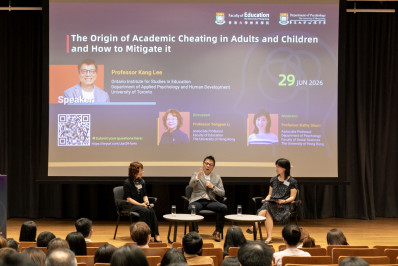
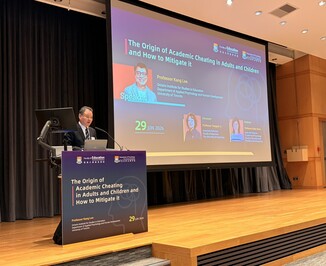
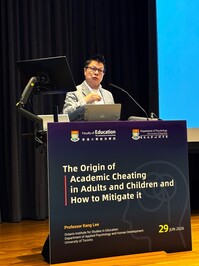
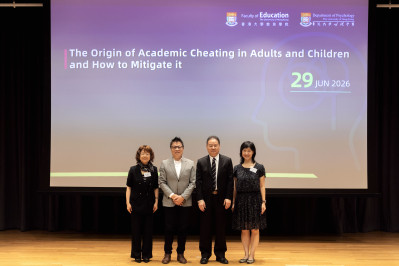
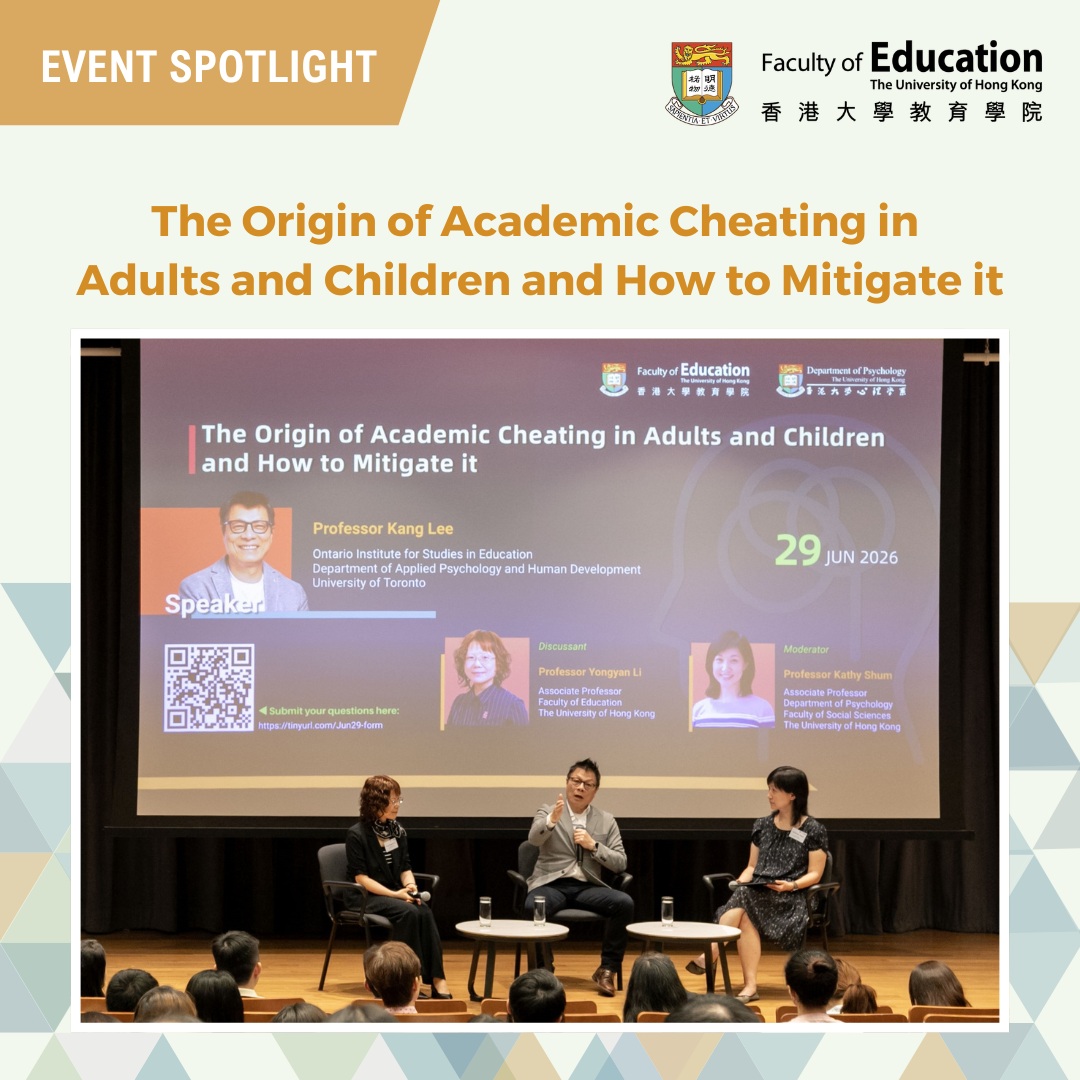
On June 29, the Faculty of Education and the Department of Psychology at The University of Hong Kong co-organised the distinguished lecture “The Origin of Academic Cheating in Adults and Children and How to Mitigate it”. Delivered by Professor Kang Lee of the Ontario Institute for Studies in Education, University of Toronto, the lecture explored the origin of academic cheating and evidence-based approaches for reducing dishonest behaviour among both adults and children.
In his welcoming remarks, Professor Yang Rui, Dean of Education, commended Professor Lee for his pioneering research in developmental neuroscience and the study of dishonesty. He emphasised that academic integrity forms the foundation of education, and that understanding the developmental, cognitive, and social factors underlying dishonest behaviour is therefore of critical importance.
Building on this theme, Professor Lee examined how and why academic cheating emerges across different stages of development. He began by tracing the long history of academic cheating, from China’s imperial civil service examinations to contemporary classrooms. Drawing on findings from studies conducted in higher education contexts, he discussed several interventions found to reduce cheating among adults, including reminders of institutional academic integrity policies, examples of sanctions imposed for misconduct, and honour-based, unproctored examination arrangements that encourage students to act responsibly.
Turning to childhood, Professor Lee presented research showing that factors such as age, verbal intelligence, self-control, and perspective-taking abilities are associated with children’s propensity to cheat. Professor Lee also explained how social cues, such as encouraging children to make promises and entrusting them with responsibility, can reduce dishonest behaviour. In addition, he illustrated how environmental design can shape behaviour, showing that reducing the accessibility and visibility of answers can serve as an effective behavioural nudge against cheating.
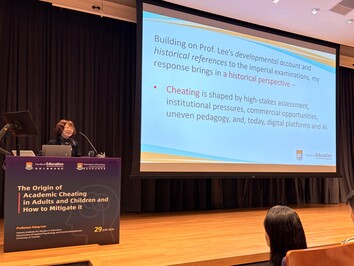
Responding to the lecture, Professor Yongyan Li, Associate Professor in the Faculty of Education, indicated that the forms of academic cheating continue to evolve alongside changing assessment systems and emerging technologies. She called for clearer guidance on academic boundaries, more thoughtful assessment design, and supportive learning environments that enable students to develop ethical practices.
The event concluded with an engaging discussion moderated by Professor Kathy Shum, Associate Professor in the Department of Psychology. Participants posed questions about academic integrity, including responses to student misconduct, the pressures associated with high-stakes academic achievement, and the growing influence of AI. The discussion provided valuable insights into how institutions can promote academic integrity while supporting students’ development in an increasingly complex educational landscape.
The video recording of this lecture is now available on our website: https://web.edu.hku.hk/event/detail-page/lecture-jun-2026