
From Assessment to Recovery:
The Role of AI in Speech–Language Therapy
AI is opening new possibilities in speech-language pathology by transforming how communication disorders are identified, assessed, and treated. From supporting early detection to personalising intervention, AI-powered tools offer valuable opportunities to enhance clinical practice.
At the Faculty’s Academic Unit of Human Communication, Learning, and Development, Professor Anthony Kong, who specialises in aphasiology, stroke-induced aphasia, and multilingual communication disorders, has been working on AI-powered automatic speech recognition (ASR) and large language models (LLMs) for speech assessment. To him, AI developments are powerful support for clinical practice. “These technologies enable data-driven insights, realistic simulations, and tailored interventions that support both educators and learners,” he explains.
A Critical Area for AI Innovation
Among the communication disorders, aphasia is distinguished by its complexity and its significant impact on daily life. Typically caused by stroke or brain injury, it involves heterogeneous language impairments that vary in type and severity depending on the location and extent of neural damage. Analysing impaired language often involves complex, multidimensional data requiring advanced analytical approaches. This is particularly the case among multilingual patients and those with co-occurring conditions, whose assessment and management require extensive expertise and resources.
Tracking recovery is also difficult. As Professor Kong notes, “Understanding recovery trajectories over time is challenging due to variability in therapy access and patient engagement,” highlighting the need for better tools to monitor recovery in aphasia care.
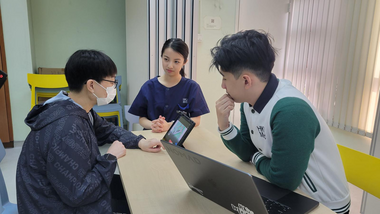
A stroke patient using AI-powered speech therapy platform for recovery.
AI for Aphasia Assessment
A recent project led by Professor Kong exemplifies these emerging affordances of AI in speech-language pathology. The project employed AI-powered ASR and LLMs, focusing on Cantonese-speaking individuals with post-stroke aphasia.
The process began with speech samples collected through clinical interviews or conversation-based tasks. These samples were transcribed into text by ASR systems trained on Cantonese data. The technology was designed to handle speech impairments while maintaining a high level of accuracy.
LLMs then analysed the transcribed speech, examining features such as vocabulary use, sentence structure, fluency, and grammatical accuracy. “AI algorithms detect speech errors, hesitations, and paraphasias, providing quantitative measures of speech impairment severity,” Professor Kong explains. “The system can generate detailed reports that help clinicians understand the nature and extent of language deficits.”
This is especially valuable because aphasic speech is often complex and highly variable. Automating transcription and linguistic analysis allows large amounts of speech data to be processed more rapidly and consistently. “By reducing the workload involved in manual transcription and analysis, these tools enable clinicians to focus more on patient care and customised treatment planning,” he adds.
Extending Therapy Beyond the Clinic
Professor Kong and his team, comprising a graduate of the Faculty’s Bachelor of Science in Speech and Hearing Sciences programme, together with professors and a student from HKU’s LKS Faculty of Medicine, have collaboratively developed SpeechOn, an AI-powered speech therapy platform for aphasia and post-stroke recovery.
SpeechOn App
“SpeechOn is an application designed to provide interactive exercises and tools to help users practise speech and language skills. It combines ASR, spaced repetition, and LLMs to support learning and recovery,” Professor Kong says. Its AI-powered semantic analysis feature listens to users, analyses their speech, and delivers real-time guidance, supporting them to practise at home while receiving immediate, targeted feedback on their language use.
Such a tool expands opportunities for therapy, particularly for individuals with limited access to in-person sessions. It also promotes more consistent practice, which is critical for effective rehabilitation.
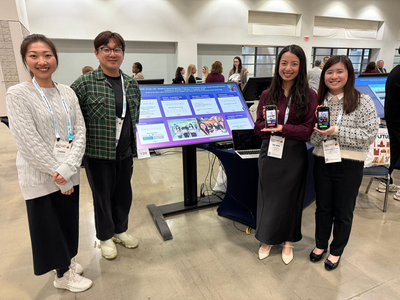
The SpeechOn team presented at the American Speech-Language-Hearing Assocation (ASHA) Convention 2025 in Washington, D.C. The project was selected for the Centennial Session, which honours studies with exceptional innovation.
Implications for Teaching and Training
The growing use of AI in speech-language pathology also has substantial implications for education and professional preparation. It contributes to the development of sophisticated simulations and virtual environments for therapy and training, while giving students and future clinicians opportunities to engage with new diagnostic and therapeutic tools. As Professor Kong observes, “AI offers safe, scalable, and consistent opportunities for students to practise assessment and intervention skills, and also helps them build the technical literacy needed in healthcare settings that increasingly rely on digital systems.”
Beyond strengthening clinical and technical skills, Professor Kong also highlights the value of interdisciplinary collaboration, with students working alongside data scientists, engineers, and clinical experts to address interconnected challenges from multiple perspectives.
The Role of Human Expertise
Although AI can improve efficiency and precision, it does not replace human expertise. Rather, it complements it.
“Human expertise remains essential for interpreting complex clinical contexts, cultural nuances, and individual patient needs that AI systems may not fully understand,” Professor Kong emphasises.
Clinicians are still responsible for making diagnostic and treatment decisions, drawing on both AI-generated insights and their professional judgement. “Human interaction provides empathetic communication, emotional support, and personalised motivation that are critical in therapy and rehabilitation,” he adds.
“No matter how advanced AI gets, the human element remains crucial. Empathy, understanding, and personal connection are qualities that machines can’t replicate. AI should support, not replace, the human touch in education,” Professor Kong concludes.
The Future of AI in Speech-Language Practice
In the coming years, AI is expected to play an increasingly prominent role in speech-language pathology. In aphasia research and practice, its ability to analyse extensive speech and language data could enhance early detection and diagnosis, enabling clinicians to intervene at earlier stages. At the same time, advances in data analysis can also reinforce highly personalised treatment plans based on each patient’s communication profile and predicted therapy response.
Telehealth, remote monitoring, and adaptive digital exercises may further widen access to care, particularly for people in underserved or rural areas. Continuous and real-time tracking of patient progress would allow clinicians to adjust therapy more dynamically, while AI-powered exercises and virtual therapists could strengthen rehabilitation beyond clinical settings.
Although these developments offer notable potential, Professor Kong stresses that their integration must be thoughtfully managed. AI can provide precise and adaptable tools; however, effective care still relies on informed clinical judgement, contextual awareness, and individualised intervention. In Professor Kong’s view, the future of speech-language therapy lies in using AI to complement clinical practice and in supporting more responsive, patient-centred care.

Professor Anthony Kong
Associate Professor
Academic Unit of Human Communication, Learning, and Development