
Experiential Learning
Teaching Futures: Teaching beyond Hong Kong – A teaching experience in Hangzhou
Teaching Futures: Teaching beyond Hong Kong – A teaching experience in Hangzhou is framed as an overseas visit, but for the participating BA and BEd (LangEd) students it became much more than “just a trip”. It offered a rare space to rethink English language education across regions, to interrogate the role of examinations in schooling, and to reconsider what it means to be a teacher in an age of AI, shifting borders, and rapidly changing expectations.
Teaching development: navigating English education across regions
Observing and teaching in Anji and Hangzhou pushed students to move beyond abstract comparisons and develop a first-person understanding of English teaching in different contexts. They encountered smaller class sizes, longer school days, and a strong emphasis on translanguaging and repetition, alongside the familiar pressures of HKDSE preparation.
“Coming back to DSE, the influence of co-acting and co-creating - not copying – HKDSE in mainland is a deep way to facilitate cultural exchange and development. For many people on the Chinese mainland, Hong Kong is famous for its entertainment, culture, products, and services, but now it can also share its educational philosophy with the Chinese mainland. This would be a very open window for the educational and economic connections between mainland and Hong Kong.” – Keira Long
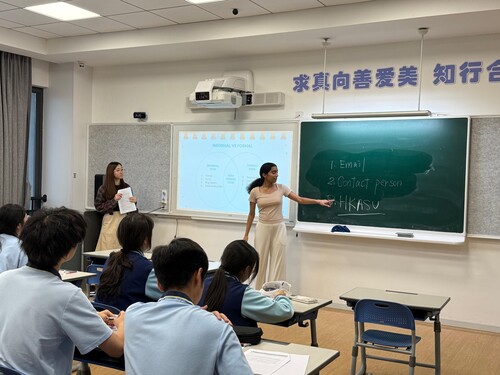
“To compare schools in Hong Kong and the Chinese Mainland, similarities exist in three areas: curriculum emphasis on knowledge application, assessment culture of tests and exams, and high parental expectations. Yet differences also lie in three different areas: classroom language practices where code-switching is allowed in Chinese Mainland, but code-switching is generally discouraged in Hong Kong; technological resources with Chinese Mainland employing more of such in their classrooms; and the much longer school hours in Chinese Mainland with more time used in teaching cultural context in English lessons when compared to Hong Kong.” – Michelle Lau
“Motivation is fundamental in English language learning, in which the need for a purpose of communication is the major drive... And teachers’ responsibilities, especially English teachers, are to find that inner passion within every student, so that they are motivated and self-driven.” – Elora Wong
Teaching HKDSE lessons to Chinese Mainland students made the issues of learner diversity concrete. Students saw how different linguistic and cultural backgrounds shaped learners’ needs, and how approaches such as code-switching, personalised materials, and technology-supported tasks could be used to bridge gaps. Participating student-teachers reflected that this was the first time she truly felt like a “prospective teacher” rather than a former student, because she had to adjust in real time to how students actually responded in class.
Rethinking exams and the meaning of education
Experiencing HKDSE teaching in Zhejiang also opened up deeper questions about examinations and their influence on how teachers, parents, and students understand education. While the HKDSE functions as a gateway to higher education, students began to see how it can shape school cultures, lesson design, and even young people’s view of what it means to learn.

“This experiential learning reminds me of the role of a language teacher. In the past, I thought DSE English tests students’ ability to master all the exam skills; this is what I would tell my students. I thought this was the intention of the design of the DSE-to test how well the students “play in this game”. However, I now realise what HKEAA intended to prepare students for real-life situations through the four exam papers. For example, when reading a paper, HKEAA hopes students will acquire inferential skills, aiming for a wider perspective on reading beyond exam papers. This realisation has a huge impact on my future teaching approach as well as reminding me of the role of a language teacher- to promote the English language, instead of just teaching them how to tackle exam papers. After all, English is far from a subject, but it is a language that bridges people together, so I really want to empower students to acquire the ability to use English to communicate and enjoy the beauty of a language.” – Brynn Chan
Other reflections grappled with the tension between exam preparation and holistic development. Students compared long school days and heavy drilling in the Chinese Mainland with their own memories of exam culture in Hong Kong. Some expressed a renewed appreciation for the design of the HKDSE, while also asking how far assessment practices can be reshaped so that tests support, rather than narrow, the broader purposes of education.
AI and education: reimagining the role of teachers
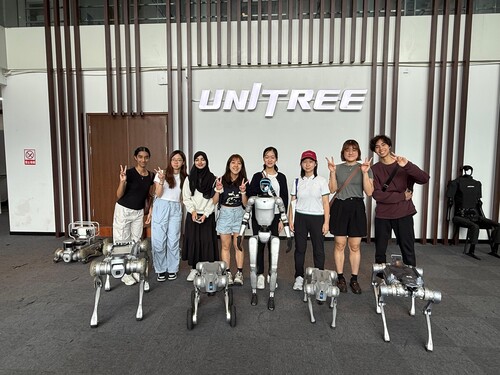
A highlight of the programme was engaging with stakeholders in the AI and robotics industry, which prompted students to think beyond the classroom walls and consider the future of their profession. Situated in a Chinese cultural context where teachers have traditionally held high moral and social status, conversations about AI raised uncomfortable yet productive questions: Are teachers really irreplaceable? What exactly is irreplaceable about them?
“The experience nudged me to brainstorm on ways of embracing a more flexible teaching philosophy that gives equal emphasis to the curriculum alignment as well as the ethical and social perspectives of language education (Gomathi, 2024). This way, students will be able to utilise AI without getting overdependent on it.” – Saadia Rahees
“The discussion led me to rethink my role as an English teacher in an era where teachers and schools are no longer the major source of knowledge for our students. … the feature of providing immediate answers to questions might lead to difficulty in engaging students in deep learning. They would lose the patience and interest in experiential learning, which is a step-by-step process to discovering answers, instead of directly spoon-feeding solutions to their curiosity and confusion. Consequently, students would only use AI as a faster version of Wikipedia, where they learn superficially about facts, but never take the opportunity to derive meaning from knowledge.” – Irene Chau
“The conversation at Unitree crystallised my thoughts on AI. Mr Lee's comment wasn't just about technology. Instead, it was about professional adaptation. My role as an educator is shifting. I must also be a "lead-learner," modelling how to use new tools like AI ethically and effectively. This connects directly to preparing students for a future where AI will be everywhere (Saravani, 2023).” – Elora Wong

“From the inspiring conversation, I learnt that the role of educators is changing from being a source of knowledge to a guide for students’ holistic development. To aptly fulfil this role, teachers should focus on leading students to think broadly and guide them to cultivate a growth mindset. This is only achievable when our concentration has turned to cultivating in ourselves the ability to self-learn and broadening our disciplinary knowledge, always humbly learning alongside our students.” – Aidan Rafael Javier
“The conversations during the professional exchange and with Mr Lee shifted my view on AI. As a student, I was told to think of it as something to avoid, but now I see how it can support both students and teachers, whether it’s helping students follow up on questions or giving teachers ideas for lesson planning. It’s definitely something I want to explore more as I grow into my role as an educator.” – Kathleen Miranda
Students began to articulate a future-oriented teacher identity: not as the sole source of knowledge, but as designers of learning environments, ethical guides, and co-learners who help young people navigate AI-rich worlds with discernment.
More than a trip: a space to rethink education
Although this experiential learning was anchored in an out-of-Hong Kong experience, its impact reached far beyond cross-border comparison. It gave pre-service teachers a room—both literal and metaphorical—to pause and reflect on what education is, and what it could become, in a world where geographic and digital borders are increasingly fluid and the roles of people and technologies are constantly being renegotiated.

“This experience made me realise that the effectiveness of a pedagogy is tied to its context, resources, and stakeholder (especially parental) expectations. As teachers, what we should do is to strike a balance between these approaches and apply whatever method that suits the context and students.” – Elora Wong
“I feel back to zero again. This trip will remind me in the future that I will never know enough about education, and about the world that my students will be facing when they grow up.” – Ruiqi Long, Keira
“Regarding the experience of the school visit, while I was having a professional exchange with the local teachers, I felt like I was actually a prospective teacher. As a former high school student, I experienced many school visits in the mainland before, and I often played a passive role, doing whatever was assigned by the teachers. But this time, my role has changed.” – Brynn Chan
For other students, Teaching Futures: Teaching beyond Hong Kong has become a milestone in their journey. It is not only about going beyond Hong Kong geographically, but about travelling further intellectually and ethically—towards a more reflective, critical, and human-centred vision of English language education across regions.
For any enquiries over the programme, please get in touch with Ms Vivien LEE via [javascript protected email address].
References:
- Gomathi, R. D., Punithaasree, K. S., Vijaya, K., & Maheswaran, S. (2024). Implementation of reinforcement learning algorithm in the development of english language learning skills. Rupkatha Journal on Interdisciplinary Studies in Humanities, 16(2). https://doi.org/10.21659/rupkatha.v16n2.35g
- Saravani, S. (2023). Artificial intelligence in education: A review of recent trends and future directions. Journal of Educational Technology & Society, 26(3), 1-18.