
Experiential Learning
BBED6806 (2025-26)
Returning from Sri Lanka: Reflections on a Three-Year Journey of Sustainable Learning (2023-24, 2024-25 and 2025-26)
The Experiential Learning team has just completed the final iteration of our Sri Lanka Service Learning Experience, and we do so with deep gratitude and a strong sense of accomplishment. Over three years, this project has grown from a service-learning initiative into a meaningful partnership that has nurtured student learning, strengthened intercultural understanding, and deepened our shared commitment to Learning for Sustainability (LfS) and Education for Sustainable Development (ESD). In collaboration with Service Civil International (SCI) Hong Kong, China, and through the course BBED6806: Opening Doors to Education for Sustainable Development, the programme has offered students a powerful opportunity to learn through service, reflection, and human connection.
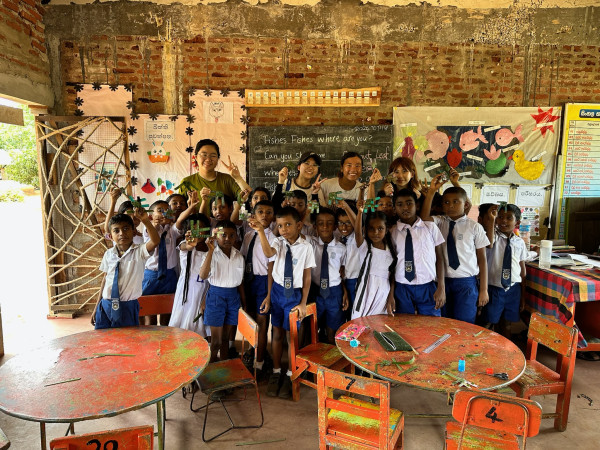
HKU students teaching the Sri Lankan students how to make a fish toy using coconut leaves.
Learning for Sustainability (LfS) and Authentic Pedagogy
Each year, students took part in a semester-long journey of preparation before travelling to Sri Lanka. Through engagement with local organisations such as Ark Eden Foundation, Mil Mill Limited, and T-Park, they explored sustainability not only as a concept, but as a way of seeing and living in the world. By the time the team arrived in Sri Lanka every year, they were ready to contribute to workshops in rural schools and participate in infrastructure enhancement projects, such as repairing cables, building playground equipment, removing concrete, constructing fences, planting in school gardens, and supporting the school environment in practical ways. Beyond the school grounds, students visited local homes, shared meals, joined dances, and learned from the community's warmth and hospitality.
These experiences transformed sustainability from theory into lived experience. Students learned that LfS is not limited to classroom content or environmental slogans; it is rooted in relationships, responsibility, and the everyday choices that shape community life. In Sri Lanka, they encountered a model of education in which care for the environment, care for others, and care for the future are closely intertwined.
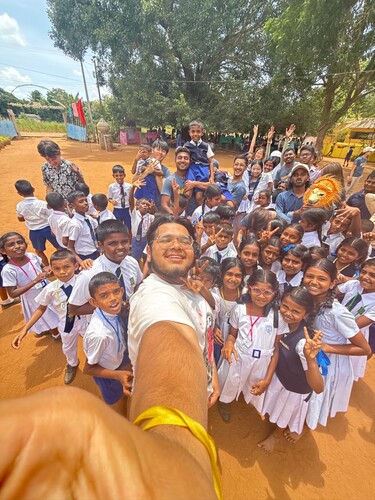
Concluding our teaching with an English day event.
Student Growth
One of the most inspiring outcomes of the project has been the depth of student learning reflected in their writing and post-trip reflections. Student reflections highlight that LfS moved from theory to "lived truth" during this trip. For many, the experience shattered rigid teaching models, shifting their focus toward nurturing curiosity rather than just delivering content. Some key learnings are:
1. Learning as an Educator
- “Education is not about filling up a bottle, but about igniting a flame and planting a seed. It is not about preaching pompously, but about providing one's own experiences to offer or create more choices for others. I feel this is the greatest insight I have gained from this journey.” — Ms Yi Ying Tong
- “I realised that teaching is not just about academic success; it is also about nurturing a sense of belonging and self-worth in students” — Mr Gaffar Kader Sulaiman
- “I came to understand that flexibility and creativity are essential, but they must be grounded in a critical reflection on the content being taught” — Mr Chan Ming Chun, Johnny
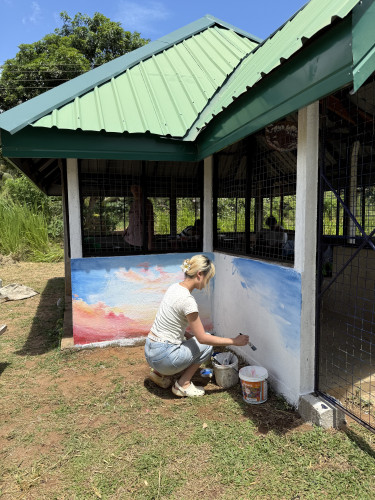
HKU students working on the mural on the Together House - look at the beautiful colours!
2. Adaptability
“If you can't escape the unexpected, embrace it as a surprise and find joy” — Mr Marco Ngai
“Handling these disruptions taught me invaluable lessons about the true necessity of patience, adaptability, and seamless communication with my groupmates to keep an unpredictable classroom moving forward” — Mr Pun Sai Kit Hugo
“We have to plan in detail but not be limited by what we planned. We ought to be thoughtful when we plan, for we have to teach according to students’ needs, but not what we assume students need” — Ms Lam Yuk Ling, Fiona
3. Sustainability
“These ideas made me realise that I had unknowingly thought that sustainability mainly was a Western idea... it showed how important it is for teachers to connect extensive ideas about sustainability to things that kids do every day” — Mr Thomas Wong
BBED6806 (2024-25)
- “When we built the playground slide, moved soil, worked with bricks and cement, helped with water-related facilities, painted, and supported the school environment, I realised that sustainable development is not an abstract concept. It is connected to whether children have a safe and joyful place to play, whether the school environment can support learning, and whether a community has the capacity to continue improving its own conditions.” — Mr Chris Hung
- “In our globalised society, we were asked whether sustainable living is achievable in Hong Kong. Before this trip, I doubted its feasibility. However, after two weeks in Sri Lanka, I realised I generated far less waste than I typically do in Hong Kong. This experience has shown me that if we all take the initiative, meaningful change is possible.” — Ms Yeung Wing Tung, Tiffany
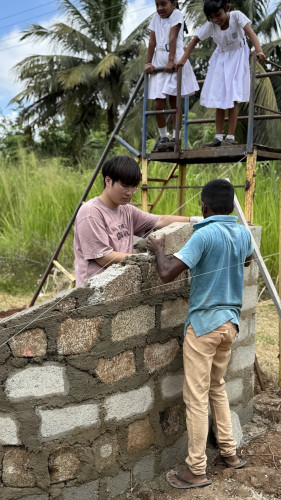
Concrete slides in the making.
4. Service Learning
“In reaching out to nurture others and the earth, we are nurtured in return. We don’t just heal the world; we heal ourselves within it, becoming fuller versions of who we were meant to be” — Ms Ella Loo
“This made me realise that ethical service learning is not only about “not doing harm”. It is also about humility, reciprocity, and constantly asking myself whether I am seeing people as partners rather than as objects of learning.” — Mr Chris Hung
“The students at the school did not share the same facilities as those in Hong Kong... However, through this experience, it made me realise that kids around the world can learn with anything” — Mr Ahmad Saahib
“This realisation brought about a crucial question: how do we navigate this vast and complex world? The answer, I believe, lies in embracing humility, recognising our limitations, and actively seeking to learn from others. It requires a willingness to step outside our comfort zones, to challenge our own biases, and to engage in meaningful dialogue with those who are different from us.” — Ms Kan Cho Ling
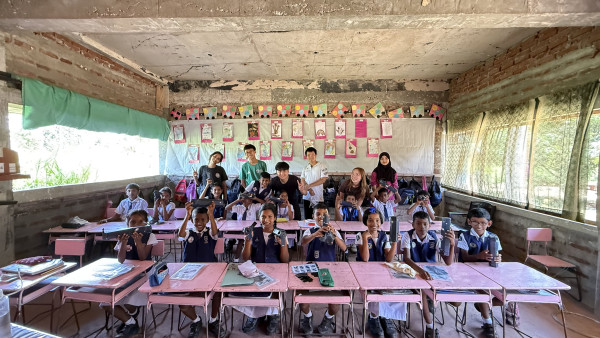
Let's make a telescope to look at animals outside!
Reflection on Reflective Practices
Over the three years, the project also evolved in how it supported reflection. While debriefing sessions, journals, and goal-setting activities remained important, this year’s introduction of the Reflective Learning Portal added a new layer of continuity and depth. The portal gave students a private, supportive space to track their learning daily, record their thoughts, and send encouragement to peers both in Hong Kong and Sri Lanka. It strengthened the reflective dimension of the course by helping students make sense of their experiences in ways that were personal, sustained, and meaningful.
This emphasis on reflection has been central to the project’s educational value. It has helped students move beyond immediate experience and begin to understand how service learning can shape long-term professional identity. Through reflection, students recognised not only what they did, but how they changed: how they listened differently, adapted more confidently, and became more aware of the ethical dimensions of service and teaching.
Students’ Reflections


BBED6806 (2023-24)
Celebrating the Success of the Project
Ultimately, the project's success lies in its ability to cultivate students' agency and leadership while creating genuine, lasting bonds within the Sri Lankan community. Beyond these structural achievements, the program has been fundamentally transformative for HKU students, fostering significant growth in both their personal development and their future as educators. As individuals, students developed profound empathy, humility, and a deeper sense of global citizenship by stepping outside their comfort zones to engage in genuine human connections. As educators, participants successfully transitioned from rigid, teacher-centred planning to flexible, student-centred methodologies, learning to critically adapt their pedagogical strategies to meet the specific cultural and linguistic needs of local classrooms.

HKU students sharing with the next group of volunteers about our reflection tracking app.
The success of the project is measured not only in student development but also in the strength of the partnership that has sustained it. We are deeply grateful to the Gallant Ho Experiential Learning Fund for supporting this initiative over three consecutive years and enabling up to 12 students annually — many from the Faculty of Education — to participate in a 13-day immersive experience.
We also thank Mr Sameera Sudam Jayasinghe (Sam) and Ms Pat Huang from SCI Hong Kong, China, whose care, coordination, and commitment have anchored each iteration of the journey. Most importantly, we extend our heartfelt appreciation to the local volunteers, the school community, and the families in Sri Lanka. Their hospitality, wisdom, and generosity have shaped this project in ways that cannot be measured only by deliverables. They have shown students that abundance can be found in community, shared effort, and close connection to nature.
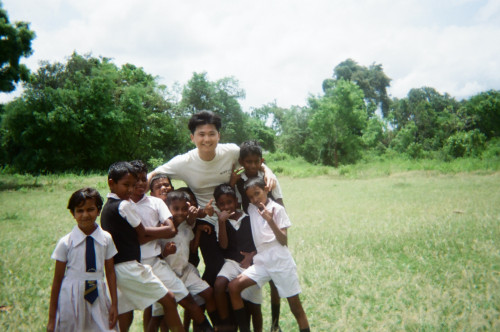
Playing with the students at in the beautiful vast land of green.
The End of the Beginning
The emotional, in-depth knowledge transfer between outgoing students and the next cohort of volunteers is a testament to the transformative power of experiential learning—an authentic, human experience that AI cannot replicate.
We emphasise that this is not the end, but merely the "end of the beginning." The Experiential Learning team remains committed to curating meaningful projects that equip students—both within and beyond our faculty—to develop agency, leadership, and global citizenship. In an age dominated by artificial intelligence, Learning for Sustainability is a vital, human-centric skill which has far-reaching impact on the lives of future generations. We look forward to continuing this journey, fostering educators who are ready to build a more sustainable future.
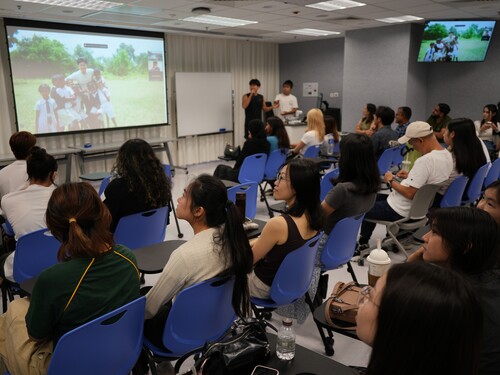
HKU students sharing their learnings to the next visitng groups of volunteers to Sri Lanka.